A Guide to Safe Sleeping Practices
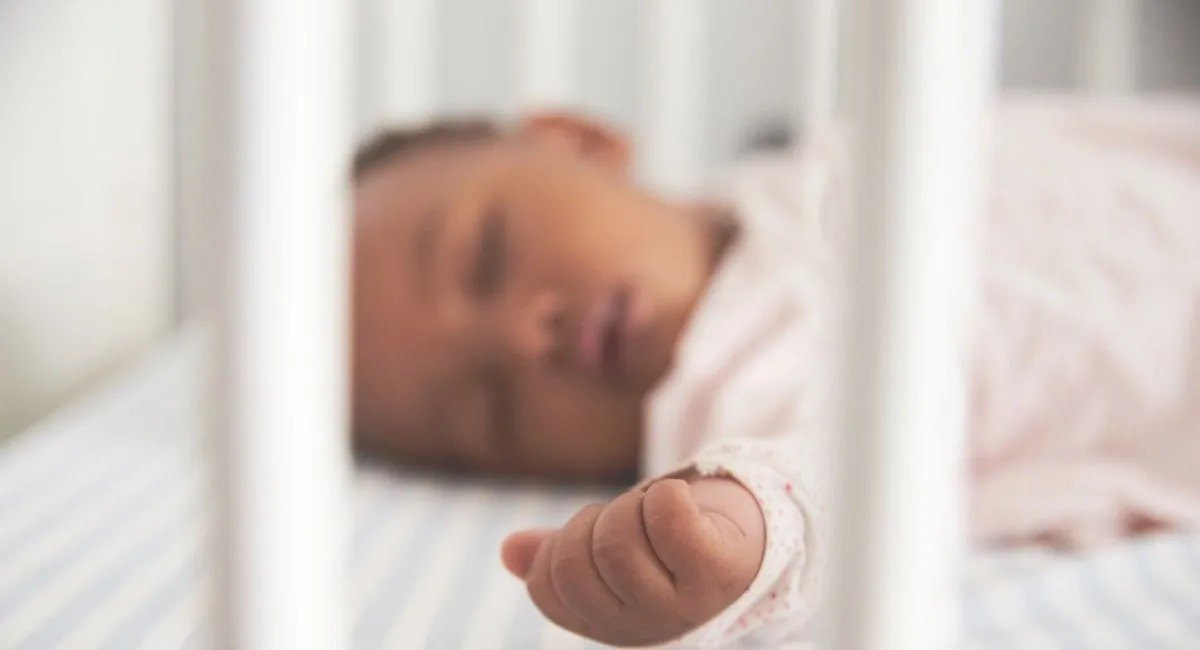
Here at Nicole Nurtures, safe sleeping is our ultimate priority.
Red Nose Australia is where you can get the most up to date, evidence based and reliable information about safe sleeping. You’ll find plenty of reliable information and advice at www.rednose.com.au
When it comes to your baby’s sleep, ensuring their safety is a top priority. Following safe sleep guidelines significantly reduces the risk of Sudden Infant Death Syndrome (SIDS) and other fatal sleeping accidents. Using trusted resources like those provided by Red Nose Australia can guide parents in creating a safe sleeping environment for their baby.
Red Nose’s Seven Safe Sleeping key principles are explained below
1. Always Place Baby on Their Back to Sleep
The safest position for your baby to sleep in is on their back. Research shows that placing babies on their backs for every sleep reduces the risk of SIDS. Babies should always be laid down on their backs, even for short naps. This recommendation applies to healthy babies and should continue until they are able to roll over independently, which usually happens around 4 to 6 months of age.
2. Keep Baby’s Head and Face Uncovered
Make sure your baby’s head and face remain uncovered while they sleep. Loose blankets, pillows, or toys in the cot pose a risk of covering the baby’s face, which can interfere with their ability to breathe freely. Instead of loose blankets, use a safe sleep product like a sleeping bag designed for babies that is the right size and fit. A sleeping bag keeps your baby warm without the risk of them pulling the covers over their head.
3. Provide a Safe Sleeping Environment
The baby’s sleeping environment plays a crucial role in sleep safety. Babies should sleep in a cot or bassinet that meets current safety standards, with a firm mattress that fits snugly. Soft bedding, such as pillows, quilts, or soft toys, should be kept out of the sleep space. The surface should be firm and flat, as soft or elevated surfaces increase the risk of suffocation.
4. Avoid Overheating
Babies can be sensitive to overheating, which is another risk factor for SIDS. To prevent this, dress your baby appropriately for the room temperature, avoiding overdressing. The room where your baby sleeps should be cool, between 16°C and 20°C, as recommended by Red Nose Australia. You can check if your baby is too hot by feeling their chest or the back of their neck. If they’re sweaty, remove a layer of clothing or adjust the room temperature.
5. Share a Room, Not a Bed
While it’s recommended that your baby sleeps in the same room as you for the first six to twelve months, sharing a bed increases the risk of sleep accidents. Bed-sharing can lead to accidental suffocation from soft bedding or a sleeping adult rolling onto the baby. Instead, keep your baby in their own safe sleep space, such as a cot or bassinet, within arm’s reach of your bed. This provides both safety and convenience for nighttime feedings.
6. Breastfeed If Possible
Breastfeeding has been shown to offer protective benefits against SIDS. Studies suggest that breastfeeding for at least six months can lower the risk of SIDS by up to 50%. While breastfeeding alone does not eliminate the risk of SIDS, it can be an important factor in creating a safer sleep environment.
7. Use a Dummy
Giving your baby a dummy during naps and at bedtime can also reduce the risk of SIDS. If your baby does not like the dummy, there’s no need to force it. If they use one, don’t worry about replacing it if it falls out during sleep.
To summarise …
Following safe sleep guidelines is one of the most effective ways to protect your baby during those early months of life. By always placing your baby on their back to sleep, keeping their sleep space free of soft bedding, and ensuring they sleep in their own cot or bassinet, you can significantly reduce the risk of SIDS and other sleep-related accidents. For more information and detailed guidance on safe sleep practices, Red Nose Australia provides invaluable resources that can help parents and caregivers ensure their baby sleeps safely.
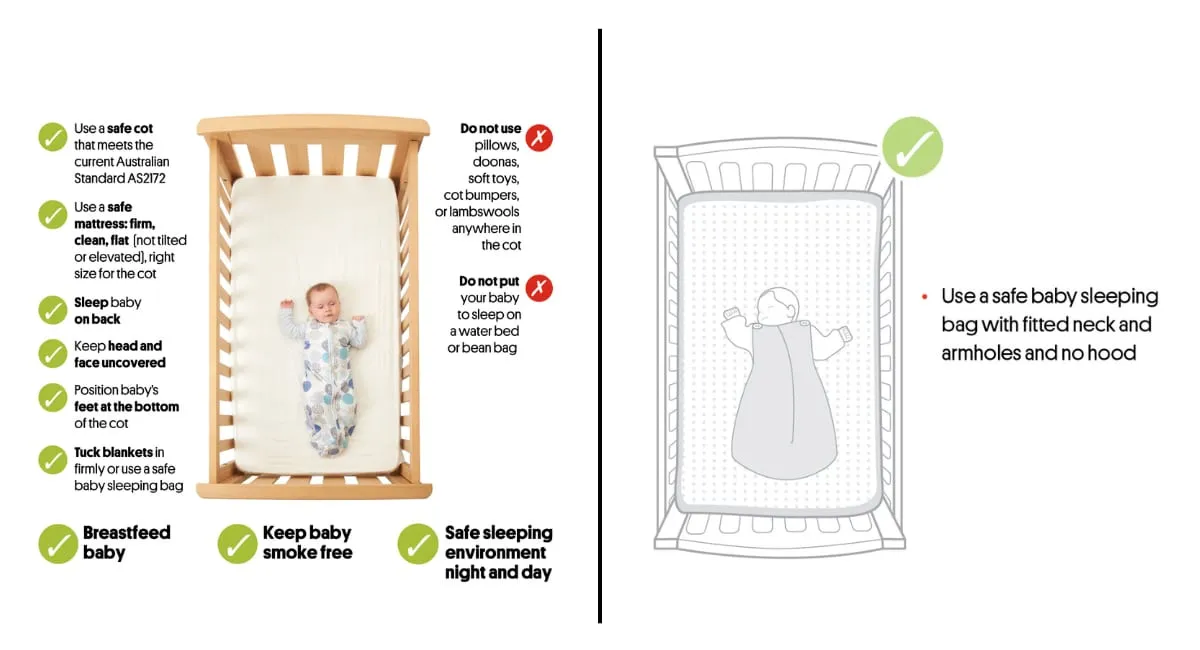
Safe Sleeping pictures from www.rednose.org.au
For further reading on this topic, visitRed Nose Australia.
Safe Sleep advice line: 1300 998 698